LingQ | Learn Languages
- 4.5
- Rating
- 1.00M
- Installs
- Free
- Price
 Analysis by App-foxy
I approached LingQ as a language-learning app for people who want more contact with real language and less time completing isolated drills. It comes from LingQ Languages Ltd. and sits in the education category, with a clear focus on reading, listening, and gradually making unfamiliar words feel familiar through context. My overall impression is that it works best as a companion for curious, self-directed learners rather than as a complete replacement for a teacher, conversation partner, or structured course.
The app is free to install and is suitable for Everyone, which makes it easy to try without committing money first. Its current version is 6.1.24, and it supports operating systems from version 10 onward. The service has been available since October 7, 2011, so it is not a new experiment in the language-learning space. Its public reception is also strong: it holds a 4.5 average from around 50 thousand ratings, with about 1.8 thousand written reviews, and it has passed one million installs.
How LingQ fits into everyday language study
I find LingQ most useful when it has a clear place in the day rather than competing with every other study tool. A short reading session can fit into a quiet break, while replaying the same material later gives listening practice without requiring a fresh lesson. The next section looks at how the app’s current version and long-running presence shape that routine, while keeping confirmed product history separate from what I would merely hope to see next.
You May Also Like

 Blood Strike: 2.5 Anniversary
Blood Strike’s Loadouts Turn Every Drop Into a Tactical Gamble
A close look at Blood Strike’s custom loadouts: how fast access to signature weapons reshapes its battle royale rhythm, rewards preparation, and narrows the gap between fights.

 Pandora - Music & Podcasts
Pandora’s Music Is Easy to Start, but Harder to Recover
Pandora’s strength is its low-effort path from a seed to a station. Its weak spot is how much confidence it asks you to place in connection, setup, and quiet recovery.

 8 Ball Pool
 Is Built on Rivalries, Rematches, and Routine
A close look at the rivalries, rematches, shared routines, and unanswered safety questions that turn a quick pool match into a persistent mobile community.

 Samsung Music
’s Quiet Strength Is Playing What You Already Own
Its reach comes less from spectacle than from dependable access to a personal library. That simplicity is both the app’s strongest retention engine and its ceiling.

 AccuWeather: Weather Radar
AccuWeather Review: A Quick, Clear Forecast for Everyday Decisions
For everyday plans, the best forecast is the one you can understand quickly. AccuWeather makes rain timing, radar, and local conditions easy to act on, with a few trade-offs.

 Hill Climb Racing
Why Hill Climb Racing Still Turns Crashes Into One More Run
A tiny car, a bumpy hill and one more upgrade: Hill Climb Racing keeps resurfacing because its simple chaos makes every near-miss feel personal.
More From Our News Desk



Learning through material you actually want to understand
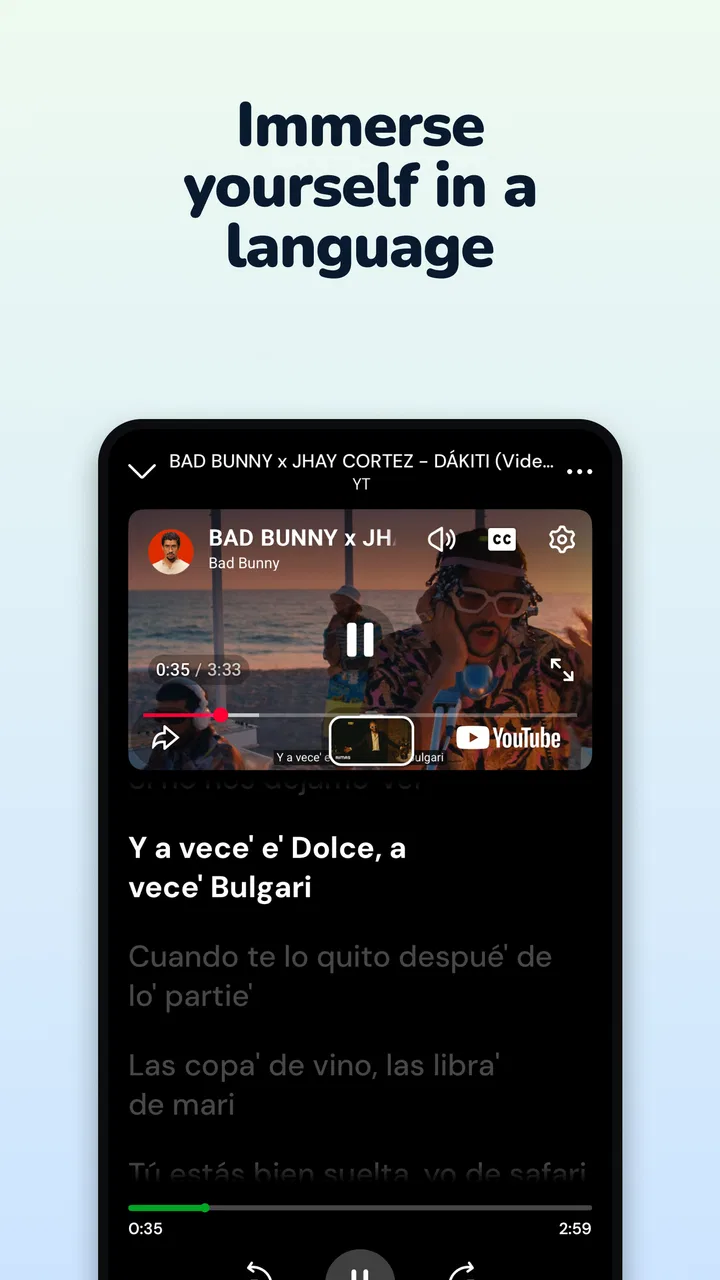
The central appeal is simple: instead of making every lesson feel like a worksheet, LingQ lets me work with language in context. That changes the experience considerably. A short story, article, dialogue, or other piece of content gives vocabulary a setting, a topic, and a reason to remember it. When I meet a word again later, I am more likely to recognize how it behaves in a sentence rather than only recall a translation.
This approach is especially useful for learners who have already grown tired of repeating beginner phrases that do not match their interests. Someone studying Spanish might prefer following a short piece about travel, while another person may stay motivated by interviews, culture, or everyday conversations. The important point is not that every item will be equally interesting; it is that the learning process is tied to meaningful input instead of being limited to artificial examples.
I found this style more demanding than a conventional drill app. With a drill-based service, the next task is usually obvious and the app tells me exactly what to practice. Here, I have to choose content, tolerate uncertainty, and decide whether a word is worth saving. That extra responsibility can feel liberating when I am motivated, but it can also make the first sessions less immediately comfortable.
A practical reading and listening routine
A useful way to use LingQ is to build a small routine around one manageable piece of content. I would start with something short enough to finish, read it once for the general meaning, then return to the words that block comprehension. Rather than stopping for every unfamiliar item, I would mark only the vocabulary that seems important or likely to appear again. This prevents the session from becoming a slow translation exercise.
On a busy day, I could use the same material in two different ways. During a quiet break, I might read it carefully and notice sentence patterns. Later, while walking or doing a simple household task, I could listen again and concentrate on recognizing phrases without looking at the screen. That two-pass workflow is more useful than endlessly collecting new lessons because it turns one piece of content into repeated exposure.
My strongest tip is to keep the difficulty slightly below the level where every sentence becomes a puzzle. LingQ is most enjoyable when I understand the broad subject while still finding a few useful words to investigate. If I need to translate nearly every line, the app starts to feel like a dictionary with extra steps. If I understand everything already, there is less opportunity for growth.
Where the app is stronger than ordinary flashcards
Flashcards are good at testing whether I can recall a word on demand, but they often separate vocabulary from the situations where it is used. LingQ’s context-first approach helps expose collocations, tone, and grammar patterns that a single-word card can hide. Seeing a term repeatedly inside different sentences can reveal more than memorizing one definition.
That does not make flashcards unnecessary. For a learner preparing for a specific exam, a dedicated spaced-repetition tool may be more precise and faster for memorizing required terms. LingQ is better suited to building a broad sense of how a language sounds and reads. I would choose it when my goal is to follow real material more comfortably, not when I need a tightly controlled list of vocabulary by a particular deadline.
What free access means in practical terms
The app itself is free, so a new user can begin exploring without paying an entry fee. That matters because the learning method is personal: some people enjoy reading and listening through contextual material, while others quickly discover that they prefer guided lessons, competitive progress systems, or direct speaking practice. Trying the free experience first is the sensible way to decide whether LingQ’s style suits you.
There are in-app purchases ranging from $14.99 to $269.99 per item. Those figures describe the available purchase range, not a promise that every learner needs to spend within it. I would treat the free access as a trial of the method and judge any paid option by how regularly I expect to use the app. Someone studying several times a week may see more value in expanded access than a person who opens it only occasionally.
The important distinction is that free installation does not automatically mean the entire learning experience has the same value for everyone. The paid side may make more sense to a committed learner who wants to build a long-term reading and listening habit, while casual users should avoid paying simply because they like the first few sessions. The right question is whether the app becomes part of a sustainable routine.
Benefits for different stages of learning
Beginners can use LingQ to become comfortable with the sound and appearance of a new language, but I would not rely on it alone at the very start. A complete beginner may need a clearer explanation of pronunciation, sentence structure, and basic progression than an immersion-oriented library naturally provides. Pairing it with a structured beginner course can make the early stage less confusing.
Intermediate learners are likely to feel the strongest benefit. At that point, grammar explanations and basic vocabulary are no longer enough; the real challenge is understanding normal language at a natural pace. LingQ gives that learner a way to move from “I know the rules” toward “I can follow what people are saying and writing.” It is also a good bridge for someone who has completed a textbook but is not ready for unrestricted native material.
Advanced learners can use it to maintain contact with a language, explore unfamiliar subjects, and notice expressions they would not deliberately study in a beginner course. The trade-off is that advanced users may eventually prefer specialized sources outside the app if they need highly technical terminology, professional communication, or detailed feedback on their own speaking and writing.
Three less obvious ways to get more from it
First, I would use the app as a filter for attention rather than as a place to save every new word. Marking too much vocabulary creates the illusion of progress while making review feel heavy. Selecting terms that repeat, connect to my goals, or prevent me from understanding the passage keeps the work focused. This is a small decision, but it determines whether the app feels like a helpful reading tool or an endless catalog.
Second, I would revisit familiar content after a gap instead of always chasing something new. A second encounter often exposes details that were invisible during the first reading: a shortened expression, a common connector, or a verb pattern. The advantage is not just improved memory; it is a gradual shift from translating word by word to recognizing chunks of language.
Third, I would separate “study mode” from “enjoyment mode.” In study mode, I can pause, inspect vocabulary, and replay difficult sections. In enjoyment mode, I should allow myself to continue even when I miss a few words. If every listening session becomes an examination, motivation suffers. If every session is passive, improvement may slow. Using the same content differently depending on my energy makes the routine easier to maintain.
The friction I would not ignore
LingQ asks for patience. The method does not always produce the quick satisfaction of a daily streak, a short quiz, or an instantly visible score. Progress can feel quiet: I notice that an article is easier, that a familiar phrase no longer needs translation, or that listening feels less tiring. Those are meaningful gains, but they are less dramatic than a row of completed exercises.
Content choice can also become a distraction. Having many possible things to read or listen to sounds attractive, yet too much choice can lead me to browse instead of study. I would solve that by choosing a small weekly theme and keeping only a few pieces in rotation. The app rewards a learner who makes decisions quickly and returns consistently.
Another limitation is that exposure is not the same as correction. Reading and listening can strengthen comprehension, but they do not automatically tell me whether my pronunciation is natural or whether my written sentence sounds awkward. If speaking accuracy is my main priority, I would add conversation practice with a teacher, exchange partner, or another service designed specifically for feedback.
How it compares with familiar alternatives
Compared with a standard drill-based language app, LingQ feels less linear and more like a personal reading-and-listening workspace. A drill app is often the better choice when I need a clearly ordered path, short sessions with little planning, or frequent testing. LingQ becomes more attractive when I want to choose subject matter and learn from language that resembles what I may encounter outside an app.
Compared with a traditional textbook, it offers a more flexible relationship with content. A textbook can explain grammar in a carefully controlled sequence and may be easier for learners who want certainty about what comes next. LingQ is better at showing how vocabulary and structures live together in connected material. I would use both if I wanted dependable explanations alongside broad exposure.
Compared with a dictionary or translation app, LingQ encourages me to keep the surrounding sentence in view. A dictionary answers “what might this word mean?” while contextual learning helps answer “how is this word normally used here?” For quick travel survival, a translation tool may be faster. For developing durable comprehension, LingQ has the more useful long-term role.
Who should spend time with it
I would recommend LingQ to a self-directed learner who enjoys discovering language through subjects that already hold their attention. It is particularly suitable for someone moving beyond the basics, a reader who wants to work through authentic material gradually, or a busy person who can turn short listening sessions into a regular habit. It also suits learners who dislike being confined to one fixed lesson sequence.
The app is less suitable for someone who wants every session planned in advance, immediate speaking correction, or a complete grammar curriculum presented in a strict order. A learner preparing for a narrowly defined test may get better results from a course built around that examination. Someone who loses motivation without visible points, levels, or daily prompts may also find LingQ too open-ended.
Parents should also consider the age rating in context. The app is rated Everyone, but the usefulness of its material still depends on the learner’s reading level, target language, and ability to work independently. A younger learner may benefit from guidance in choosing manageable content, while an adult learner can usually shape the experience around personal interests more easily.
My cost-conscious recommendation
I would begin with the free version and use it long enough to test three things: whether I enjoy learning from connected material, whether I can choose content without wasting study time, and whether I return to the app voluntarily. If the answer to all three is yes, a paid purchase may be worth considering because the value comes from repeated use, not from merely unlocking an app.
I would not pay in advance to solve a motivation problem. If I am already avoiding language study, additional access will not create a routine by itself. In that situation, a short, structured course or scheduled conversation may offer better value because it supplies external direction. LingQ works financially when the learner already sees a realistic place for it in the week.
My final verdict on LingQ
LingQ is a thoughtful education app with a clear identity: it helps me learn through repeated contact with meaningful language rather than reducing study to isolated drills. Its free starting point lowers the risk of trying that approach, while the paid purchase range means committed users should think carefully about how much they will actually use it. The strongest results come from selecting manageable content, revisiting it, and combining reading or listening with separate speaking practice.
My recommendation is to try it if you want language learning to feel closer to reading, listening, and exploring than to completing a rigid course. I would skip it as a primary tool if I need a teacher-like sequence, constant correction, or fast exam-specific preparation. For the right learner, however, LingQ can turn ordinary curiosity into a steady habit—and that is a more convincing reason to keep using it than any short-term streak.
FAQs for LingQ | Learn Languages
01What is LingQ, and how does it help you learn a language?
LingQ is a language-learning app built around reading and listening to authentic content rather than following only traditional lessons. During my review, the app provided access to stories, podcasts, interviews, news, and other materials in multiple languages. You can look up unfamiliar words, save them as vocabulary, and review them later. This approach is especially useful for learners who want to build comprehension through regular exposure to real-world language.
02Which languages can you learn with LingQ?
LingQ supports a wide selection of languages, including popular choices such as Spanish, French, German, Italian, Portuguese, Japanese, Korean, Chinese, Russian, and many others. The amount and type of available content can vary between languages, so the learning experience may feel more developed for some languages than others. Before downloading, it is worth checking whether your target language has suitable beginner, intermediate, and advanced materials.
03Is LingQ free to use, or does it require a subscription?
LingQ offers free access, but the free version comes with limitations that may affect regular study. Premium plans generally provide more saved vocabulary, expanded access to learning tools, and additional features for managing lessons and progress. Some content or functions may also be restricted depending on your account level. If you plan to use LingQ seriously, review the current subscription prices, trial conditions, and renewal terms before confirming a purchase.
04Can you use LingQ offline without an internet connection?
LingQ can be useful when you are traveling or studying without a constant connection, although offline availability may depend on the content and your account features. Lessons generally need to be downloaded in advance, so you should prepare your reading and listening materials while connected to the internet. Offline study may not include every online function, such as importing content, synchronizing progress, or accessing community features.
05Is LingQ suitable for beginners, or is it better for advanced learners?
LingQ can work for beginners, but the experience is particularly appealing to learners who already understand basic grammar and want to improve through extensive reading and listening. Beginners may need to spend time learning how the vocabulary colors, dictionaries, and lesson tools work. The app does offer easier content, but it does not always feel like a highly guided course. Learners who prefer clear explanations, drills, and a fixed curriculum may need to combine LingQ with another resource.
Pros
- Large library of authentic content for reading and listening practice.
- Supports many languages
- including less commonly taught options.
- Built-in dictionary makes looking up unfamiliar words quick.
- Tracks known vocabulary and learning progress automatically.
- Audio playback can be adjusted to match your preferred learning speed.
Cons
- Many useful lessons and features require a paid subscription.
- The interface can feel overwhelming for beginners at first.
- Speaking practice and live interaction are limited compared with tutoring apps.
- Vocabulary review may feel repetitive without a consistent study routine.
- Some imported or community-created content may vary in quality.

LingQ | Learn Languages
Gallery